News & Updates

  • Global voices, shared futures: lessons from the scge sustainability webinar series

    The final instalment of our SCGE Global Webinar Series: Strengthening Pathways into Sustainability Careers marked a significant milestone in our British Council–funded project on gender and sustainability. Supported through the Going Global Partnerships programme, which champions equitable, inclusive, and internationally connected higher education, the series brought together students, academics, and sustainability professionals from around the world for three insightful and inspiring sessions. Designed to explore how we can build more inclusive and accessible routes into sustainability-focused careers, the webinars created a vibrant space for learning, collaboration, and reflection. With free access made possible by our sponsors, participants gained valuable insights from thought leaders who are shaping a more just and sustainable future. Overall, the series brought together over 75 participants, including 73% students, 16% academics, 8% practitioners and 3% other. Participants joined us from Africa (52%), Europe (34%), Asia (9%), and Oceania (5%). An aggregate score from the three speaker evaluations is overwhelmingly positive, with 70% strongly agreeing and 27% agreeing that the webinars were informative and engaging.

    Greening finance and advancing sustainable agriculture in Africa

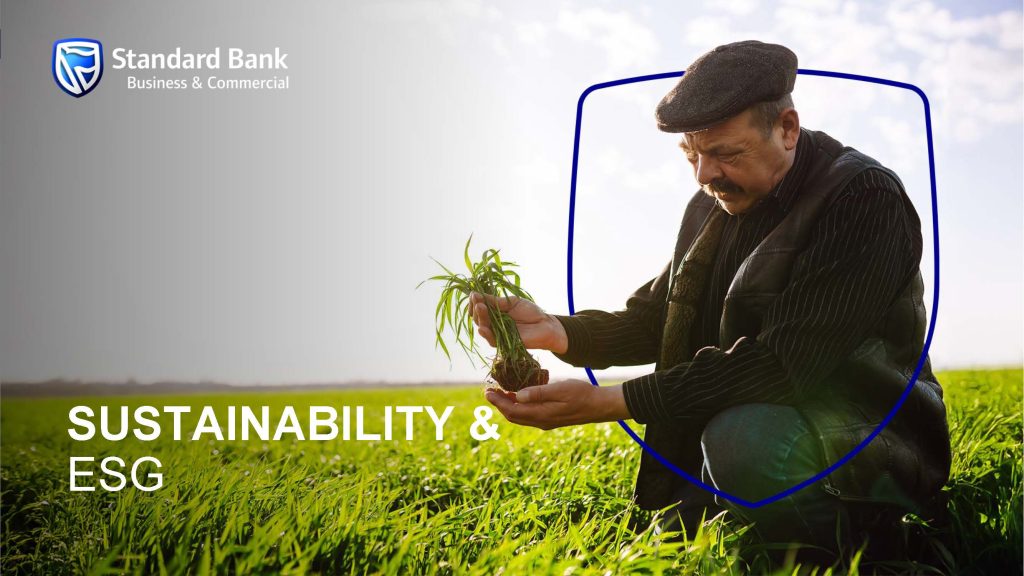
    SUSTAINABILITY & ESG Webinar Slide

    The first webinar on 13 November 2025 featured Dr. Andrea Campher, Senior Manager for Sustainability in Agribusiness at Standard Bank Group, presenting “Greening Finance: A Banker’s Perspective on Sustainability.” Geographically, the audience was concentrated in Africa (53.8%) and Europe (38.5%), with minimal representation from Asia and Oceania. Dr. Campher reflected on her career journey from law into sustainable finance, showing how cross-sector skills can support emerging opportunities in ESG and sustainability. She emphasised Africa’s need for holistic, innovative solutions to drive long-term socio-economic development and highlighted Standard Bank’s commitment to aligning its strategy with the continent’s challenges and opportunities. She also explored the role of Climate Smart Agriculture, noting its potential to increase productivity, strengthen resilience, reduce emissions, and enhance carbon sequestration. She concluded by underscoring the importance of sustainable food value chains that are economically viable, socially beneficial, and environmentally responsible – from farm to fork.

    Global risks, climate action, and business accountability for a sustainable future

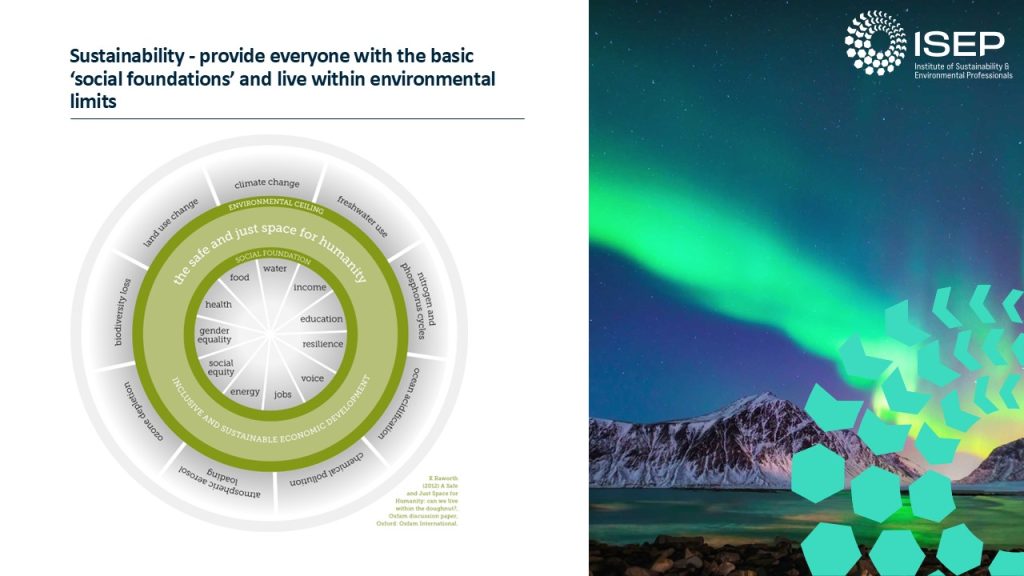
    Sustainability - provide everyone with the basic 'social foundations' and live within environmental limits Webinar slide

    The second webinar on 18 November 2025 featured Martin Baxter, Deputy CEO of the Institute of Sustainability and Environmental Professionals (ISEP), presenting “Driving Change for a Sustainable Future.” The majority of participants were based in Africa (57.7%), followed by Europe (26.9%) and Oceania (11.5%). Martin highlighted ISEP’s role in shaping global sustainability standards and stressed that true sustainability requires securing basic social foundations while staying within planetary limits. Baxter outlined the severity and interconnectedness of global risks, highlighting the biodiversity crisis and the gap between the Paris Agreement’s goals and their actual implementation. He explained the many factors involved in setting national carbon budgets, from scientific evidence to economic, fiscal, social, and regional considerations. For businesses, he underscored the growing importance of transparency, disclosure, and the development of a sustainability-ready workforce. Martin closed with a call to action: plan for at least a 2°C pathway, set credible net-zero targets for 2050, prepare detailed transition and skills plans, report progress openly, and work with supply chains to reduce carbon intensity.

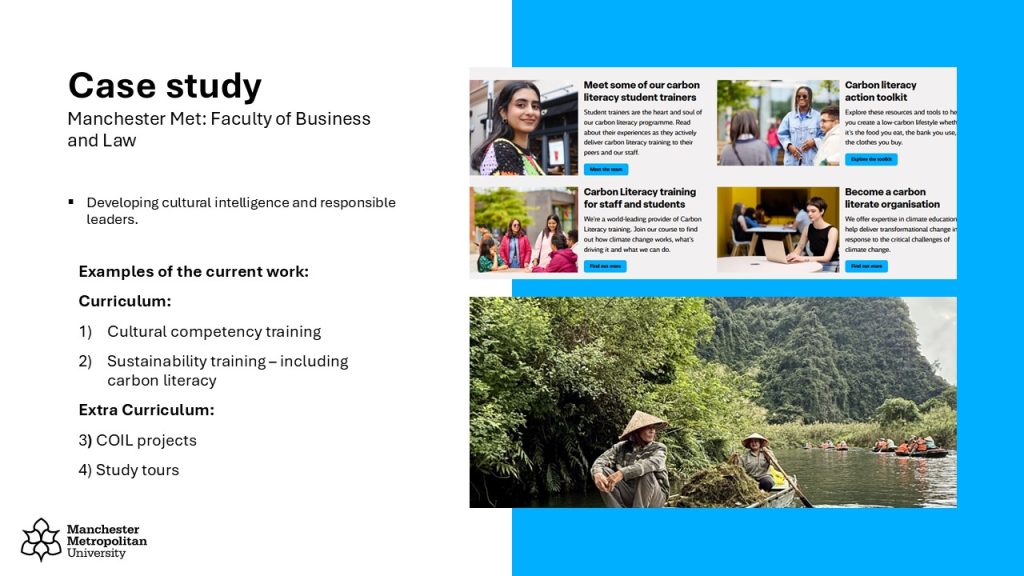
    Cultural intelligence as a core competency for global sustainability careersDeveloping cultural intelligence and responsible leaders Webinar slide

    The final webinar on 20 November 2025 featured Professor Liz Warren, Faculty Head of International at Manchester Metropolitan University, who presented “Bridging Worlds: The Power of Cultural Intelligence in Global Sustainability.” The geographic distribution was balanced between Africa and Europe (each 37.5%), with additional participation from Asia and Oceania (12.5% each). Professor Warren introduced the concept of Cultural Intelligence (CQ) and its four dimensions, showing how CQ equips individuals to work effectively across diverse cultural contexts. Using examples from Manchester Met’s global sustainability projects, she demonstrated how CQ builds trust, strengthens inclusive and gender-aware teamwork, supports locally appropriate solutions, and enhances employability in global sustainability careers. Emphasising that “CQ helps us align global goals with local realities,” Professor Warren encouraged students to develop adaptability, empathy, and a global mindset through practices such as intercultural teamwork, language learning, and reflective learning. She concluded by urging participants to intentionally cultivate CQ as a key competency for inclusive leadership and more equitable, sustainable outcomes aligned with the SDGs.

    Concluding remarks

    As the SCGE Global Webinar Series drew to a close, it became clear that strengthening pathways into sustainability careers requires more than technical expertise; it demands a blend of financial insight, scientific understanding, cultural intelligence, and a commitment to social and environmental justice. Across three sessions, our speakers illuminated the transformative role that young professionals can play in shaping a more equitable and sustainable future, while emphasising the skills and mindsets needed to get there. Supported by the British Council’s Going Global Partnerships programme, this series provided an essential platform for cross-border learning, global collaboration, and practical guidance for those aspiring to make meaningful contributions in the sustainability field. The conversations sparked over these three weeks remind us that the future of sustainability is shared, and that cultivating inclusive, globally connected career pathways is essential to realising it.

    The recordings are available on the project website.

  • Four Countries, One Mission: British Council Workshops Empower Hundreds of Female Students to Pursue Sustainability Careers

    A groundbreaking series of British Council Global Partnerships-funded workshops has brought together over 228 female students from Botswana, South Africa, Ghana, and the United Kingdom, all united under a shared mission: to strengthen pathways into sustainability careers and advance gender equality in the green economy. From August to September 2025, universities and industry experts collaborated to inspire, equip, and mentor the next generation of women sustainability leaders.

    Botswana Leads the Way: First Workshop Ignites New Career Pathways
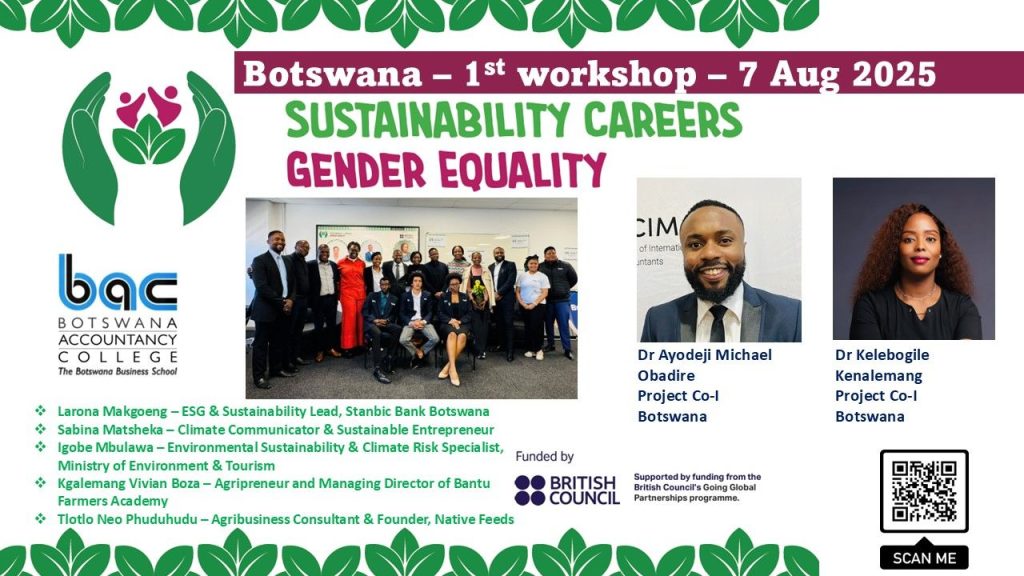
    Botswana SCGE Workshop

    The series launched on 7 August 2025 at Botswana Accountancy College (BAC), where 72 students, 5 industry practitioners, 6 staff members, and 1 executive guest took part in the inaugural event. Organised by Dr. Ayodeji Michael Obadire and Dr. Kelebogile Kenalemang, the workshop addressed a critical gap: research showed 84% of sampled students were unaware of sustainability career opportunities.

    The event opened with a powerful address by Dr. Tebogo Magang, reaffirming BAC’s commitment to inclusive, future-focused education. A dynamic panel discussion featuring leaders from finance, agriculture, climate risk, and sustainability, including Larona Makgoeng (Stanbic Bank) and climate communicator Sabina Matsheka, brought real-world insights to students.

    Participants discovered how sustainability careers span multiple sectors, reflecting Botswana’s national development priorities. The day concluded with networking and the launch of a Sustainability Mentorship Programme, ensuring long-term impact.

    South Africa Empowers Change Through Reflection and Real-World Practice
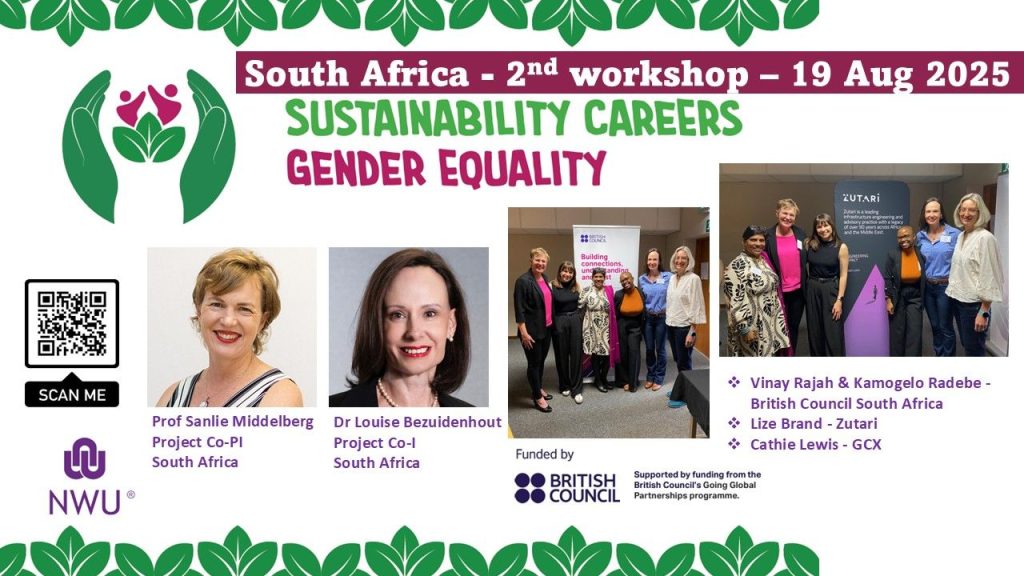
    SCGE South Africa Workshop

    On 19 August 2025, the second workshop was hosted at North-West University with 52 female students in attendance. Led by Prof. Sanlie Middelberg and Dr. Louise Bezuidenhout, the workshop offered practical insights into the green economy and strategies for overcoming gender-based barriers in industry.

    The programme featured a thought-provoking welcome by Prof. Verona Leendertz and an inspiring keynote by Vinay Rajah from the British Council South Africa. Industry leaders Cathie Lewis (GCX) and Lize Brand (Zutari) shared stories of adaptability, resilience, and interdisciplinary growth. Students also participated in a hands-on case study session, tackling real sustainability challenges.

    Many participants described having powerful “ah-ha moments,” realising that their diverse academic and personal backgrounds hold value in shaping sustainability solutions. The event closed with reflections, networking, and the formal introduction of the mentorship programme.

    Ghana Builds a Virtual Hub for Sustainability Dialogue and Skills Development
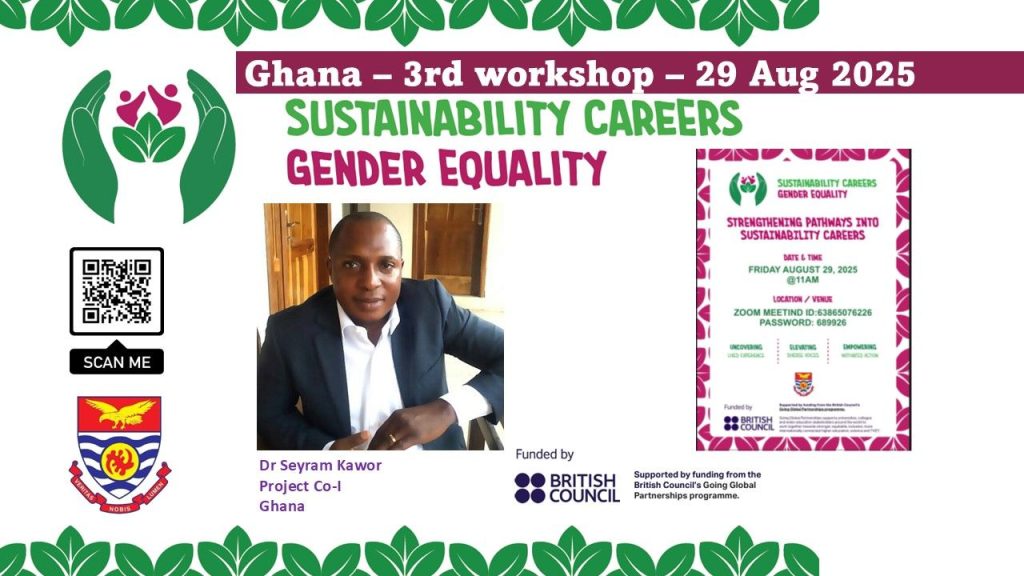
    SCGE Ghana Workshop

    The series continued on 29 August 2025 with the third workshop, hosted virtually and attended by 60 female students representing six Ghanaian universities. Organised by Dr. Seyram Kawor from the University of Cape Coast, the session created a vibrant online learning community focused on gender equality and sustainability.

    Opening remarks were delivered by university leaders, including Prof. Daniel Agyapong and Prof. Samuel Kweku Agyei, followed by insights from the project leader, Prof. Nadia Gulko. A panel titled “In the Shoes of a Sustainability Practitioner” featured practitioners from KPMG, EY, and the Kokrobitey Institute, sharing candid stories about career challenges and opportunities.

    Students engaged in skills-building sessions on ESG reporting, communication, and systems-thinking, as well as an SDG Quiz game that blended learning with fun. Many participants noted that the workshop broadened their understanding of sustainability careers beyond environmental science, revealing pathways in consulting, accounting, entrepreneurship, and creative sectors.

    United Kingdom: Collaboration and Inspiration Mark the Final Workshop
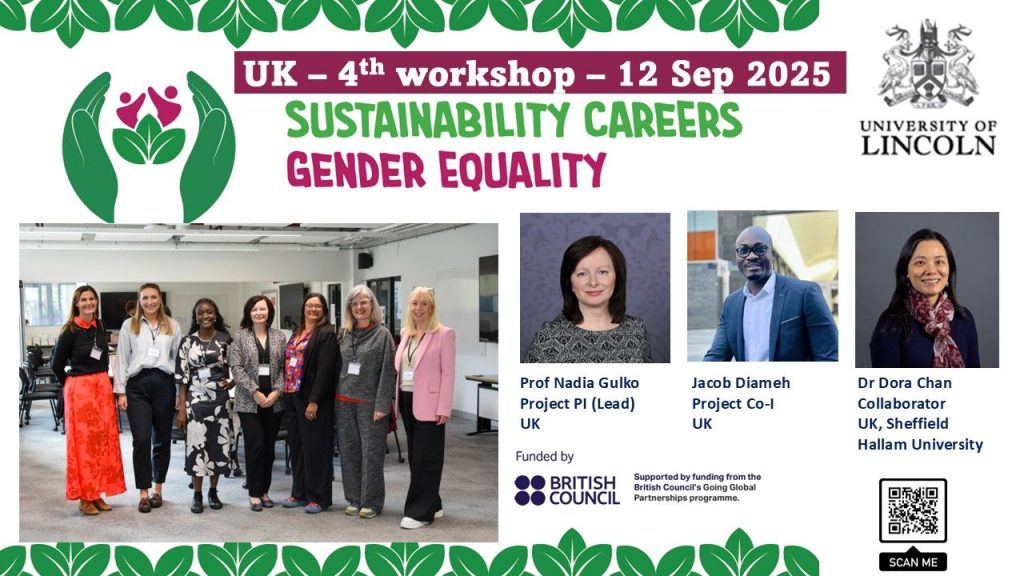
    SCGE UK Workshop

    The final workshop in the series was held on 12 September 2025 in the UK, jointly hosted by the University of Lincoln and Sheffield Hallam University. The event gathered 44 students from four universities, 6 industry speakers, and over 20 academics, creating a dynamic space for connection and inspiration.

    Speakers included Sarah Mukherjee MBE (ISEP), Blanca Antizar (Isle Utilities), and governance expert Kerry Round, Jane Powell, and Esther Kabiito (DFDS). Their insights encouraged students to pursue their ambitions with boldness, embrace mentorship, and develop interdisciplinary skills.

    Organised by Prof. Nadia Gulko, Sally Newnham, and Dr. Dora Chan in close collaboration with the project team and supported by dedicated university leadership at the University of Lincoln and Sheffield Hallam University, the workshop highlighted the power of partnership. Volunteers, photographers, and marketing teams contributed to an energising, well-supported event. As the programme concluded, students were urged to “believe in yourself, celebrate your story, and dream higher”, messages that resonated deeply across participants.

    A Cross-Continental Impact: Building Sustainable Futures Together

    Across four countries, the workshops created meaningful learning spaces where women gained:

    • Exposure to diverse sustainability career pathways
    • Direct mentorship and engagement with practitioners
    • Skills for navigating gender barriers in the green economy
    • Networks that extend beyond national borders
    • A shared vision for sustainability leadership

    Thanks to the support of the British Council, the dedication of organising teams, the generosity of industry speakers, and the enthusiasm of more than 228 student participants, the Sustainability Careers – Gender Equality series has laid a strong foundation for future-ready, inclusive, and impactful sustainability careers.

    The journey continues, with mentorship, collaboration, and empowered young women leading the way toward a more sustainable and equitable future.