
The final instalment of our SCGE Global Webinar Series: Strengthening Pathways into Sustainability Careers marked a significant milestone in our British Council–funded project on gender and sustainability. Supported through the Going Global Partnerships programme, which champions equitable, inclusive, and internationally connected higher education, the series brought together students, academics, and sustainability professionals from around the world for three insightful and inspiring sessions. Designed to explore how we can build more inclusive and accessible routes into sustainability-focused careers, the webinars created a vibrant space for learning, collaboration, and reflection. With free access made possible by our sponsors, participants gained valuable insights from thought leaders who are shaping a more just and sustainable future. Overall, the series brought together over 75 participants, including 73% students, 16% academics, 8% practitioners and 3% other. Participants joined us from Africa (52%), Europe (34%), Asia (9%), and Oceania (5%). An aggregate score from the three speaker evaluations is overwhelmingly positive, with 70% strongly agreeing and 27% agreeing that the webinars were informative and engaging.
Greening finance and advancing sustainable agriculture in Africa
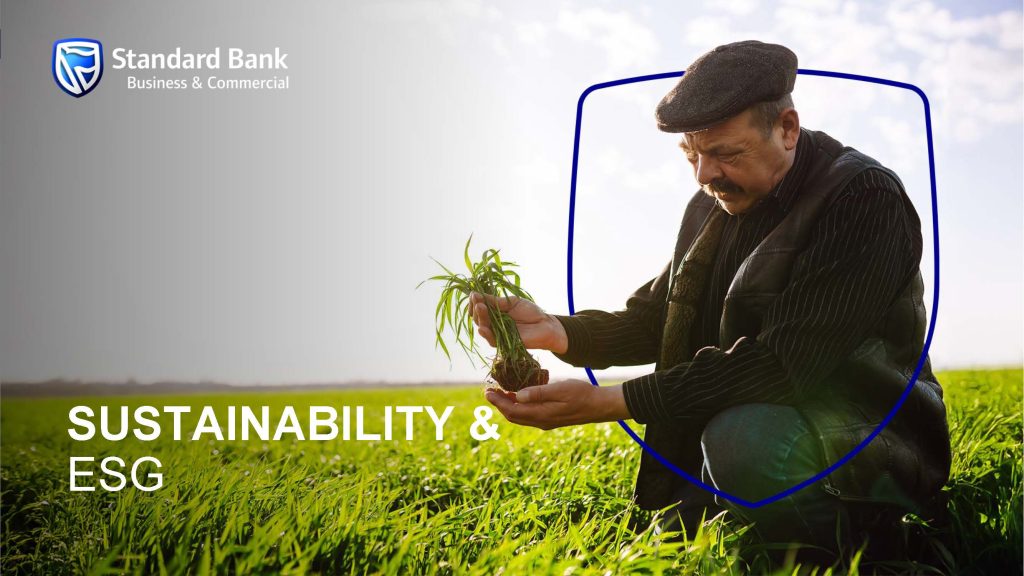
The first webinar on 13 November 2025 featured Dr. Andrea Campher, Senior Manager for Sustainability in Agribusiness at Standard Bank Group, presenting “Greening Finance: A Banker’s Perspective on Sustainability.” Geographically, the audience was concentrated in Africa (53.8%) and Europe (38.5%), with minimal representation from Asia and Oceania. Dr. Campher reflected on her career journey from law into sustainable finance, showing how cross-sector skills can support emerging opportunities in ESG and sustainability. She emphasised Africa’s need for holistic, innovative solutions to drive long-term socio-economic development and highlighted Standard Bank’s commitment to aligning its strategy with the continent’s challenges and opportunities. She also explored the role of Climate Smart Agriculture, noting its potential to increase productivity, strengthen resilience, reduce emissions, and enhance carbon sequestration. She concluded by underscoring the importance of sustainable food value chains that are economically viable, socially beneficial, and environmentally responsible – from farm to fork.
Global risks, climate action, and business accountability for a sustainable future
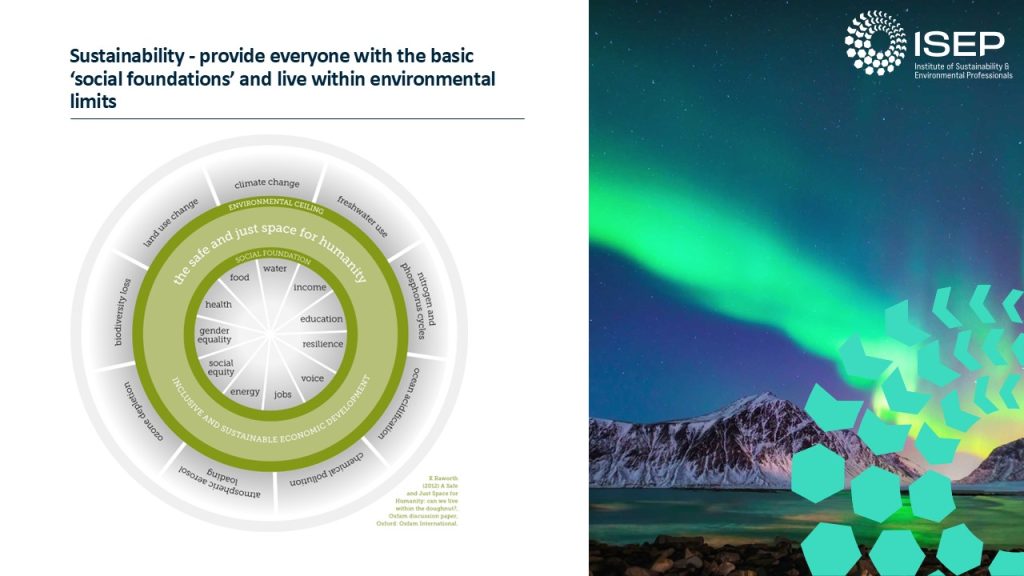
The second webinar on 18 November 2025 featured Martin Baxter, Deputy CEO of the Institute of Sustainability and Environmental Professionals (ISEP), presenting “Driving Change for a Sustainable Future.” The majority of participants were based in Africa (57.7%), followed by Europe (26.9%) and Oceania (11.5%). Martin highlighted ISEP’s role in shaping global sustainability standards and stressed that true sustainability requires securing basic social foundations while staying within planetary limits. Baxter outlined the severity and interconnectedness of global risks, highlighting the biodiversity crisis and the gap between the Paris Agreement’s goals and their actual implementation. He explained the many factors involved in setting national carbon budgets, from scientific evidence to economic, fiscal, social, and regional considerations. For businesses, he underscored the growing importance of transparency, disclosure, and the development of a sustainability-ready workforce. Martin closed with a call to action: plan for at least a 2°C pathway, set credible net-zero targets for 2050, prepare detailed transition and skills plans, report progress openly, and work with supply chains to reduce carbon intensity.
Cultural intelligence as a core competency for global sustainability careers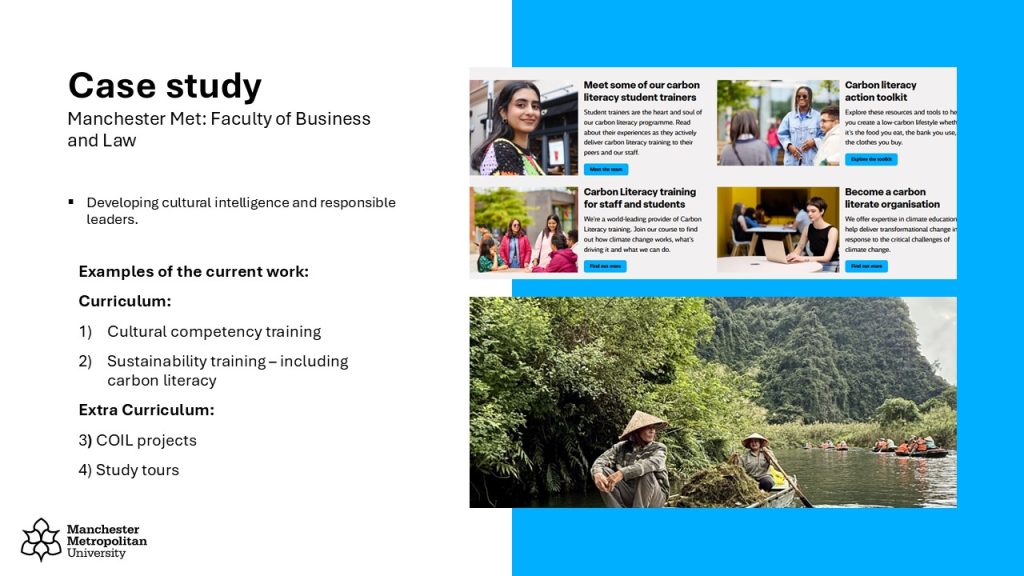
The final webinar on 20 November 2025 featured Professor Liz Warren, Faculty Head of International at Manchester Metropolitan University, who presented “Bridging Worlds: The Power of Cultural Intelligence in Global Sustainability.” The geographic distribution was balanced between Africa and Europe (each 37.5%), with additional participation from Asia and Oceania (12.5% each). Professor Warren introduced the concept of Cultural Intelligence (CQ) and its four dimensions, showing how CQ equips individuals to work effectively across diverse cultural contexts. Using examples from Manchester Met’s global sustainability projects, she demonstrated how CQ builds trust, strengthens inclusive and gender-aware teamwork, supports locally appropriate solutions, and enhances employability in global sustainability careers. Emphasising that “CQ helps us align global goals with local realities,” Professor Warren encouraged students to develop adaptability, empathy, and a global mindset through practices such as intercultural teamwork, language learning, and reflective learning. She concluded by urging participants to intentionally cultivate CQ as a key competency for inclusive leadership and more equitable, sustainable outcomes aligned with the SDGs.
Concluding remarks
As the SCGE Global Webinar Series drew to a close, it became clear that strengthening pathways into sustainability careers requires more than technical expertise; it demands a blend of financial insight, scientific understanding, cultural intelligence, and a commitment to social and environmental justice. Across three sessions, our speakers illuminated the transformative role that young professionals can play in shaping a more equitable and sustainable future, while emphasising the skills and mindsets needed to get there. Supported by the British Council’s Going Global Partnerships programme, this series provided an essential platform for cross-border learning, global collaboration, and practical guidance for those aspiring to make meaningful contributions in the sustainability field. The conversations sparked over these three weeks remind us that the future of sustainability is shared, and that cultivating inclusive, globally connected career pathways is essential to realising it.
The recordings are available on the project website.